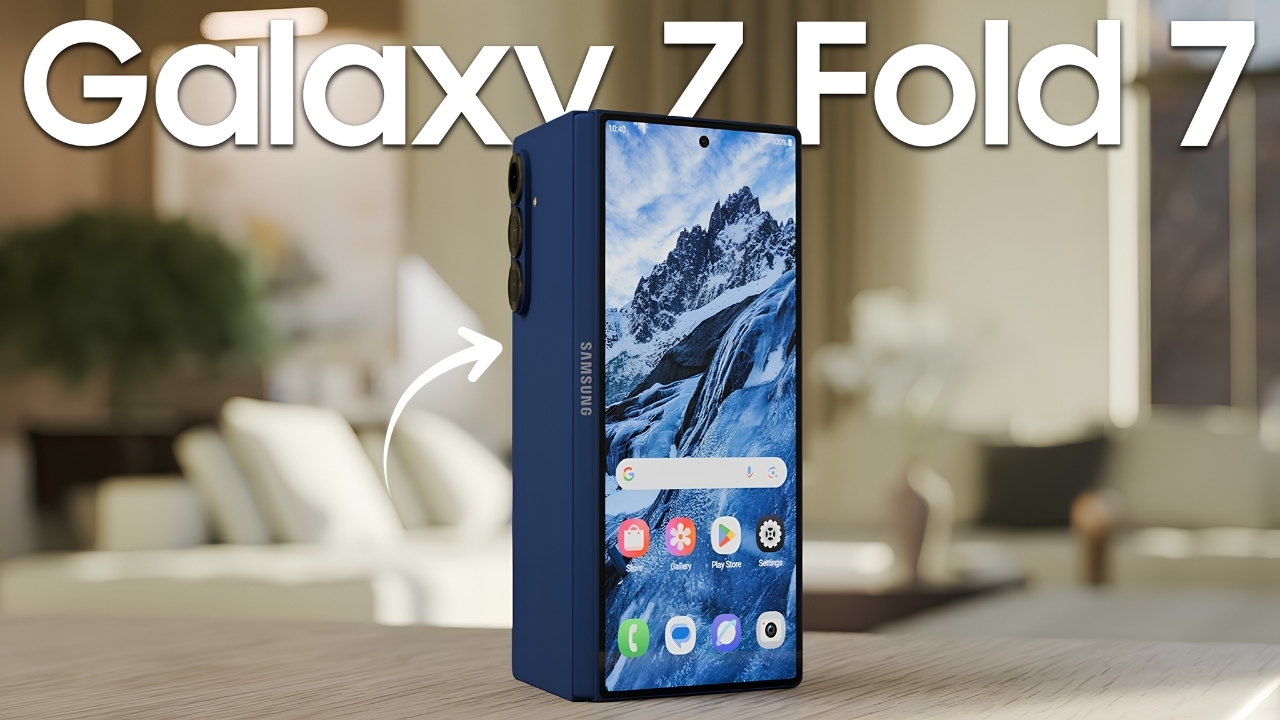
Samsung – Galaxy Z Fold7 : Samsung’s Galaxy Z Fold7 has arrived as the company’s most refined book-style foldable yet, bringing a noticeably slimmer body, larger screens, flagship-level camera hardware and a stronger focus on everyday artificial intelligence.
For Australians who have watched foldable phones develop from expensive curiosities into capable productivity devices, the Fold7 represents a more mature step forward.
The device officially became available in Australia after pre-orders opened on 10 July 2025, with general availability beginning on 1 August.
Samsung is positioning it as more than a phone with a folding screen: it is intended to combine the portability of a conventional premium handset with the workspace of a compact tablet.
A Foldable That Feels Less Like a Compromise
The most immediate change is physical. Samsung has made the Galaxy Z Fold7 thinner and lighter than earlier models, an important improvement for a category where bulk has often been the biggest barrier to everyday use.
When closed, the Fold7 measures 8.9mm thick, while its unfolded profile comes down to 4.2mm. It weighs 215 grams, putting it closer to the feel of a conventional large-screen flagship phone than many people may expect from a device that opens into an 8-inch display.
The slimmer chassis means it is easier to hold during a commute, slip into a jacket pocket or use one-handed for quick messages.
Samsung has also widened the cover display to 6.5 inches. This matters because the outer screen is no longer simply a secondary panel for checking notifications.
It is designed to work like a normal smartphone screen, giving users room to type, browse maps, reply to messages and take calls without unfolding the device every time.
For people in Australia who regularly move between work, travel and home, that flexibility may be the Fold7’s strongest appeal. It can remain folded for quick tasks, then open when a larger canvas becomes useful.
An 8-Inch Screen for Work and Entertainment
Once opened, the Galaxy Z Fold7 reveals an 8-inch Dynamic AMOLED 2X main display with an adaptive refresh rate of up to 120Hz. The internal screen has a resolution of 2184 x 1968, while the 6.5-inch outer display uses a 2520 x 1080 resolution.
Both screens are intended to deliver smooth scrolling, responsive touch controls and strong colour reproduction for video, games and productivity apps.
The larger internal display changes the kind of tasks a phone can handle comfortably. Reading documents is less cramped, editing presentations becomes more practical and web pages feel closer to a tablet experience.
It is also well suited to multitasking, such as keeping a video call open while reviewing notes, comparing products across browser windows or responding to emails while looking at a calendar.
Samsung’s software approach is increasingly centred on making that expanded screen useful rather than merely impressive. The Fold7 runs One UI 8 based on Android 16, with features designed around multi-window work and Galaxy AI tools.
The company is also highlighting broader Gemini integration, including AI assistance that can work across apps and support more conversational interactions.
That does not mean the Fold7 will replace a laptop for everyone. Long-form writing, professional software and intensive spreadsheets are still generally better on a full computer.
But for people who need to review, annotate, communicate and organise while away from a desk, the larger display gives the phone a clearer role.
A Major Camera Upgrade
The Fold7’s camera system is one of the most significant changes in Samsung’s foldable range. For the first time in the Fold series, Samsung has fitted a 200MP wide-angle main camera, bringing the device closer to the camera ambitions of the company’s top-tier Ultra phones.
The rear camera system includes a 200MP main sensor, a 12MP ultra-wide camera and a 10MP telephoto camera with 3x optical zoom. There are also 10MP cameras for both the cover display and the internal screen.
In practical terms, the main camera upgrade should benefit daylight photography, landscapes, portraits and crops where users want to retain detail.
The telephoto lens gives travellers and event-goers a more useful option for photographing subjects at a distance, while the ultra-wide camera remains valuable for group shots and broad Australian scenery.
The Fold7 is also built around the idea that a foldable phone can make photography more flexible. It can be partially folded and placed on a surface for hands-free shots, used with the cover screen as a viewfinder, or opened to give the photographer a larger preview of images and video.
Still, buyers should approach camera claims realistically. A high-resolution sensor does not guarantee perfect results in every situation, particularly in difficult low light or fast-moving scenes.
The Fold7’s advantage is that it narrows the historical gap between foldable phones and the best traditional flagship models.
Power, Battery and Durability
Samsung has equipped the Galaxy Z Fold7 with the Snapdragon 8 Elite for Galaxy processor, the premium chipset designed to support demanding applications, mobile gaming, advanced imaging and AI-driven features.
The phone is available with 256GB, 512GB or 1TB of storage, while the top storage version includes 16GB of memory; other configurations have 12GB.
For Australian users, the device supports 5G, Wi-Fi 7, Bluetooth 5.4, NFC and eSIM functionality. Those features make it suitable for modern mobile plans, contactless payments, high-speed home networks and travel arrangements that rely on digital SIMs.
Battery capacity is listed at 4,400mAh, with 25W wired charging, wireless charging and Wireless PowerShare support. While the battery size is familiar from previous Fold models, efficiency gains from the newer processor and software will be important because the large internal display can consume considerable power during video streaming, gaming or multitasking.
The handset carries an IP48 rating. That means it has meaningful water resistance, including protection for submersion in fresh water under specified conditions, but users should not interpret the rating as permission to expose the device to sand, dust-heavy environments or careless treatment.
Foldables remain more mechanically complex than standard slab-style phones, and protecting the hinge and inner display remains sensible.
What the Samsung – Galaxy Z Fold7 Means for Australia
The Galaxy Z Fold7 is an important release because it tackles the central criticism that has followed premium foldables for years: they can be impressive, but do they feel natural enough to use every day?
Samsung’s answer is a device that is thinner, lighter and more conventionally phone-like when shut, while becoming substantially more capable when opened.
The larger cover screen reduces the need to unfold it for simple tasks. The expanded internal display encourages real multitasking. And the 200MP main camera gives the Fold range a more credible position among high-end camera phones.
Also Read this – 2026 BMW iX Motorhome luxury Sweet home like 7 Star hotel, engine power is 670HP
For professionals, frequent travellers, content consumers and early adopters, the Fold7 offers a compelling all-in-one device. For buyers who mainly use a phone for calls, social media, basic messaging and occasional photos, a traditional flagship may still be simpler and more practical.
Yet the Galaxy Z Fold7 shows that foldables are no longer trying only to look futuristic. In Australia, Samsung’s latest model is making a stronger argument that a folding phone can fit naturally into daily life while offering a screen size that conventional smartphones cannot match.