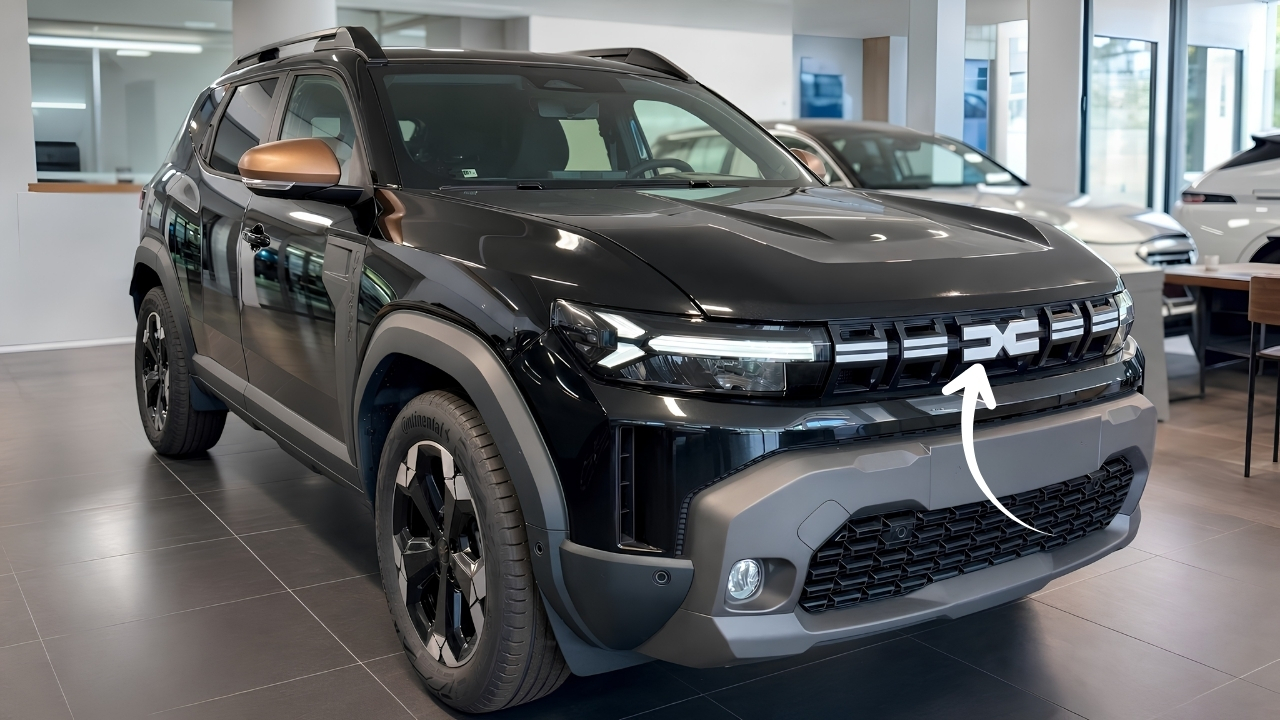
2026 Dacia Duster : The 2026 Dacia Duster arrives with a clear mission: keep the brand’s rugged, practical SUV formula while adding more efficient hybrid technology and a broader range of capability-focused powertrains.
For buyers in the United States, however, there is one important point from the start: Dacia does not officially sell the Duster in America, and there has been no confirmed U.S. launch announcement.
That does not mean the Duster is irrelevant to American SUV fans. The compact crossover represents the type of vehicle many U.S. shoppers increasingly want—reasonably sized, simple in concept, comfortable enough for daily use, and able to handle poor roads, light trails, snow, and weekend adventures.
It is positioned in overseas markets as an affordable alternative to more expensive compact SUVs, with an emphasis on usability over luxury.
The Duster is sold under the Dacia name in Europe and selected global markets, while Renault uses the Duster name in other regions.
For 2026, attention is centered on expanded electrification, including a new hybrid 4×4 system that combines gasoline, electric assistance, and available LPG capability in certain markets.
Hybrid Power Takes Center Stage
The headline development for the 2026 Dacia Duster is the Hybrid-G 150 4×4 powertrain. It is an unusual setup in the compact-SUV segment because it combines a 1.2-liter, three-cylinder gasoline engine with a 48-volt mild-hybrid system, an electric motor mounted at the rear axle, all-wheel drive, and the ability to operate on gasoline or LPG in applicable markets.
The combustion engine sends power to the front wheels through a six-speed dual-clutch automatic transmission. At the rear, an electric motor helps create all-wheel-drive capability through its own two-speed transmission.
Dacia lists total output at 154 horsepower, while the gasoline engine produces 230 Nm of torque. The rear electric motor can deliver up to 87 Nm of torque when needed.media.
In practical terms, this setup is designed to give the Duster stronger low-speed response, improved traction on loose or slippery surfaces, and more efficient driving in city traffic.
Rather than building a traditional mechanical driveshaft connection from front to rear, the electric rear axle can provide assistance when traction conditions demand it. That is a technically interesting approach for an SUV intended to remain accessible rather than premium.
Dacia also continues to offer conventional gasoline, mild-hybrid, and full-hybrid choices across different markets. The newer Hybrid 155 uses a 1.8-liter gasoline engine paired with electric motors and a multimode automatic transmission.
This version is targeted more at drivers who spend most of their time commuting or traveling on paved roads, where smoother stop-and-go operation and reduced fuel use matter more than serious off-road ability.
Built for Everyday Adventure
The Duster’s appeal has always been rooted in its straightforward design. It does not try to look like a luxury SUV, and that is part of the point.
The 2026 model retains the squared-off, outdoorsy proportions that give it a more purposeful appearance than many rounded compact crossovers.
Its body is relatively compact, measuring about 4.34 meters long, yet it uses a wheelbase of roughly 2.66 meters to create useful cabin space.
That places it in the broad territory Americans associate with small crossovers, although it is smaller than some popular U.S. models such as the Honda CR-V, Toyota RAV4, and Ford Escape.
Ground clearance is another key selling point. Depending on specification, the Duster is designed with enough ride height to make unpaved roads, rutted tracks, snowy driveways, and campground access routes less intimidating.
It is not meant to challenge dedicated body-on-frame off-roaders, but it is more adventure-ready than a typical city-focused crossover.
The Duster’s 4×4 version also gives it an identity that many modern compact SUVs have lost. While all-wheel drive is common in the American market, most systems are optimized mainly for wet-weather security.
The Duster is intended to feel more at home beyond pavement, especially with its robust exterior cladding, short overhangs, and available all-wheel-drive hardware.
Technology Without Excess
Inside, the 2026 Duster follows Dacia’s value-first approach. The cabin is designed to be durable and functional rather than extravagant.
Buyers should not expect the softest materials, the largest digital displays, or the most elaborate ambient lighting found in upscale competitors. Instead, the focus is on equipment that supports everyday driving.
Depending on trim and market, the Duster can include a 7-inch digital driver display, a 10-inch central touchscreen, smartphone connectivity, parking sensors, a rearview camera, automatic lighting and wipers, and alloy wheels.
Safety technology includes systems such as automatic emergency braking, lane-keeping assistance, traffic-sign recognition, driver-fatigue monitoring, and distance alerts.
That balance may appeal to buyers who feel that many new vehicles have become overly dependent on large screens and complicated controls.
The Duster aims to provide modern safety and connectivity features without making the experience feel overly technical or expensive.
For a hypothetical U.S. buyer, the strongest argument for the Duster would be its apparent simplicity. It offers an SUV shape, useful clearance, hybrid options, and practical technology without pretending to be a luxury vehicle.
Its weakness, at least from an American perspective, would likely be its limited local dealer support, certification status, and uncertainty around parts availability.
2026 Dacia Duster
Despite online speculation, the 2026 Dacia Duster has not been announced for sale in the United States. Dacia is part of the Renault Group, and Renault has not established a mainstream passenger-vehicle sales operation in the U.S. market.
The Duster is also developed primarily for regions with different regulatory requirements, consumer expectations, dealer networks, and powertrain preferences.
For the Duster to reach American showrooms, it would need to meet U.S. safety and emissions rules, undergo testing and certification, and be supported by a nationwide sales and service network. It would also need a clear business case in one of the world’s most competitive compact-SUV markets.
Also Read this – 2026 Bugatti Hyper RV come with fully loaded luxury features and interior, engine is powerful
Still, the Duster highlights an interesting gap in the U.S. market. American shoppers have plenty of compact crossovers, but fewer choices that combine a rugged personality, available hybrid technology, genuine light-off-road potential, and a no-frills ownership concept.
If a Duster-like vehicle ever came to the U.S. under Renault, Nissan, or another related brand, it could attract buyers looking for something more adventurous than a standard commuter crossover.
For now, the 2026 Dacia Duster remains a vehicle to watch from afar. Its latest hybrid systems and all-wheel-drive development show that affordable SUVs do not have to stand still.