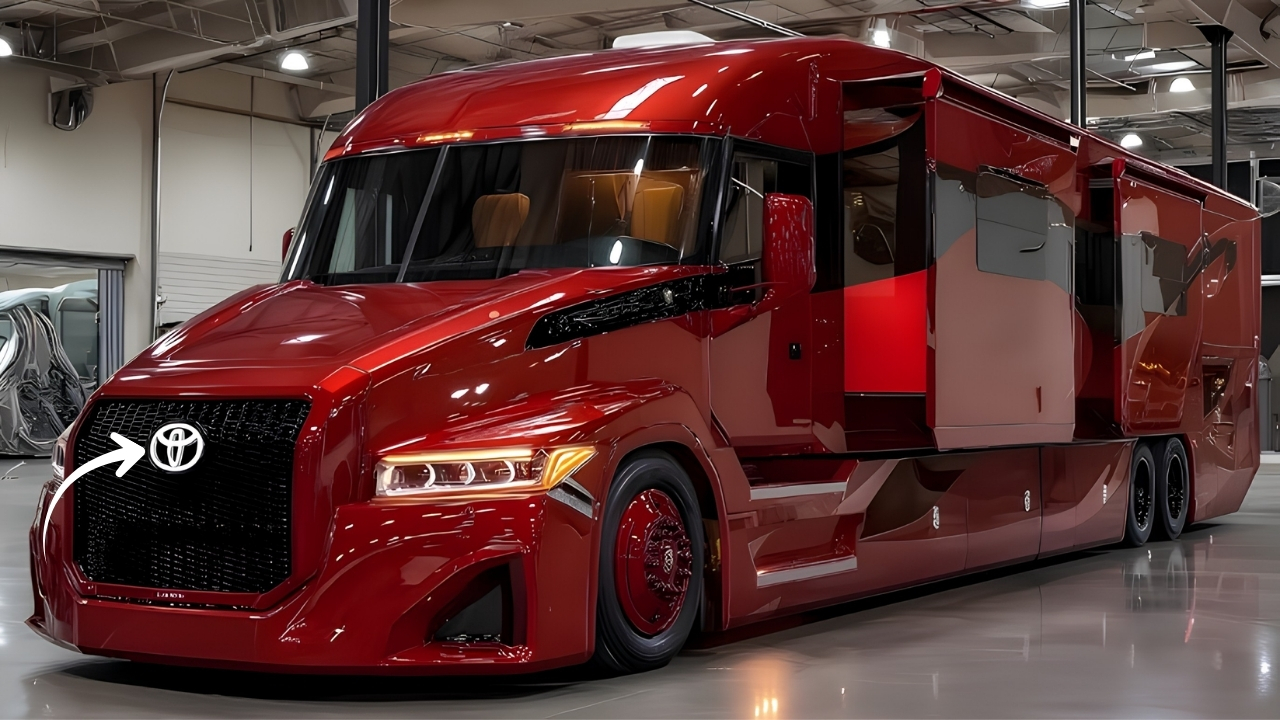
2026 Toyota Motorhome : Interest in a possible 2026 Toyota motorhome has grown quickly across the United States, especially among RV travelers, campers, and overlanding fans.
Social-media videos and several websites have promoted images and descriptions of Toyota-branded luxury motorhomes, camper vans, hybrid RVs, and even dramatic six-wheel-drive expedition trucks.
The idea is easy to understand: Toyota has built a reputation for durable trucks, SUVs, and hybrid vehicles, so a purpose-built motorhome wearing a Toyota badge sounds like a natural next step.
However, the real news is more careful than the viral headlines suggest. As of September 2026, Toyota has not announced a factory-built 2026 Toyota motorhome for sale in the United States.
There is no confirmed Toyota Class A, Class B, Class C, or 6×6 motorhome listed in the company’s official U.S. 2026 vehicle information.
Claims involving names such as “Toyota Hike Cruze,” “Grand Liberty,” “Atlas,” or “ThunderTrek” should therefore be treated as unofficial concepts, speculative renderings, or entertainment-focused content rather than verified products.
That distinction matters for buyers. A polished video can make a vehicle appear ready for dealerships, complete with claimed specifications, interiors, hybrid powertrains, and off-road hardware.
But a real vehicle launch normally comes with an official manufacturer announcement, detailed specifications, production confirmation, safety documentation, dealer availability, and a recognizable place in the company’s model lineup.
Without those details, prospective buyers should avoid assuming that a Toyota motorhome is coming to U.S. showrooms.
Why the Story Feels Believable
The enthusiasm surrounding a Toyota motorhome is not random. Toyota already has several vehicles that fit naturally into the outdoor-travel lifestyle.
The Tacoma remains one of the brand’s best-known midsize pickups, with an audience that includes campers, trail users, and people who tow small trailers.
Toyota’s larger trucks and SUVs also have strong reputations among travelers who value durability, resale strength, and access to nationwide service.
Toyota is also continuing to invest heavily in the Tacoma’s future. In July 2026, Toyota Motor North America announced a major expansion of its San Antonio manufacturing campus, including a second assembly line intended to support Tacoma production.
The company said the expansion would add 2,000 jobs and 2.5 million square feet to the Texas operation by 2030. That does not confirm a Toyota RV, but it reinforces the importance of the Tacoma platform to Toyota’s U.S. strategy.
This gives the motorhome rumor a realistic foundation. It is entirely plausible for independent RV companies and specialty shops to build campers around Toyota trucks.
A Tacoma can carry a lightweight slide-in camper, support a rooftop tent setup, pull a travel trailer, or serve as the base for an overland build. None of those options requires Toyota itself to manufacture a complete motorhome.
For many American travelers, that may be the more practical path anyway. Instead of waiting for a factory Toyota RV, owners can choose a conversion that matches their own travel style: a basic weekend camping setup, a rugged off-road camper, or a more refined truck-based living space.
The U.S. Market Reality
Toyota’s current U.S. product range includes passenger cars, SUVs, trucks, minivans, hybrids, plug-in hybrids, and electric vehicles, but not a conventional factory motorhome.
Toyota does sell commercial vans and people movers in certain overseas markets, including the Hiace, but that vehicle is not part of Toyota’s normal new-vehicle retail lineup in the United States.
This is important because some online posts describe a “2026 Toyota Hiace camper” as if it will be widely sold through American Toyota dealerships. That is not supported by a verified Toyota U.S. launch announcement.
Imported vehicles, gray-market vehicles, and independent conversions can exist in limited circumstances, but they are not the same as a new factory-backed Toyota RV program with nationwide sales and service.
The U.S. RV market also creates challenges for any automaker entering the motorhome category. A motorhome is more than a vehicle chassis. It includes plumbing, electrical systems, propane or battery equipment, cabinetry, insulation, water tanks, appliances, roof structures, and long-term warranty requirements.
Toyota would need to decide whether to build these systems itself, partner with a major RV manufacturer, or simply provide a chassis for outside conversion companies.
That is why a Toyota-branded camper van could make more sense than a giant luxury motorhome. A compact camper based on a proven truck, van, or hybrid platform would fit Toyota’s practical image.
It could appeal to couples, remote workers, national-park visitors, and outdoor families who want a smaller vehicle than a traditional motorhome.
What Buyers Can Do Now
Americans interested in a Toyota-based RV do have practical alternatives today. A Tacoma can be paired with a lightweight camper shell, rooftop tent, truck-bed sleeping platform, or slide-in camper designed within the truck’s payload limits.
Owners can also use Toyota trucks and SUVs to tow appropriately rated travel trailers, teardrop campers, or small off-road trailers.
The key word is appropriately. Camping equipment can add weight quickly. Before choosing a truck camper or trailer, buyers should review payload capacity, towing capacity, tongue weight, gross vehicle weight rating, axle limits, tire ratings, and the weight of passengers and cargo.
A camper that looks compact in a showroom may exceed a vehicle’s safe limits once water, batteries, food, recovery equipment, and personal belongings are added.
Independent conversions can offer impressive comfort, but buyers should investigate the builder as carefully as they would investigate the vehicle.
Ask about structural work, warranty coverage, electrical-system certification, water-system winterization, replacement parts, insurance requirements, and service support.
A conversion company with strong craftsmanship and a clear warranty may provide a better ownership experience than an unverified “new model” promoted only through online video.
For buyers who want Toyota reliability combined with RV convenience, a sensible route may be a Toyota tow vehicle plus a well-matched trailer.
That approach separates the living unit from the daily driver, gives owners more flexibility at campgrounds, and allows the tow vehicle to remain useful when the trailer is parked.
2026 Toyota Motorhome
The 2026 Toyota motorhome story is exciting, but the confirmed news is simple: Toyota has not officially launched a factory-built motorhome in the United States for the 2026 model year.
Viral images, YouTube walkarounds, invented model names, claimed specifications, and dramatic 6×6 designs should not be treated as official product information.
Still, the interest behind these stories says something meaningful about the market. U.S. buyers clearly see room for a Toyota-based camper that blends dependable engineering, efficient powertrains, manageable size, and real outdoor capability.
Also Read this – 2026 Audi Q7 Unrevealed Ultimate luxury features, advance technology, fuel efficient
Until Toyota makes a formal announcement, the best options remain Toyota truck campers, towing setups, and professionally built third-party conversions—not an unconfirmed factory motorhome.