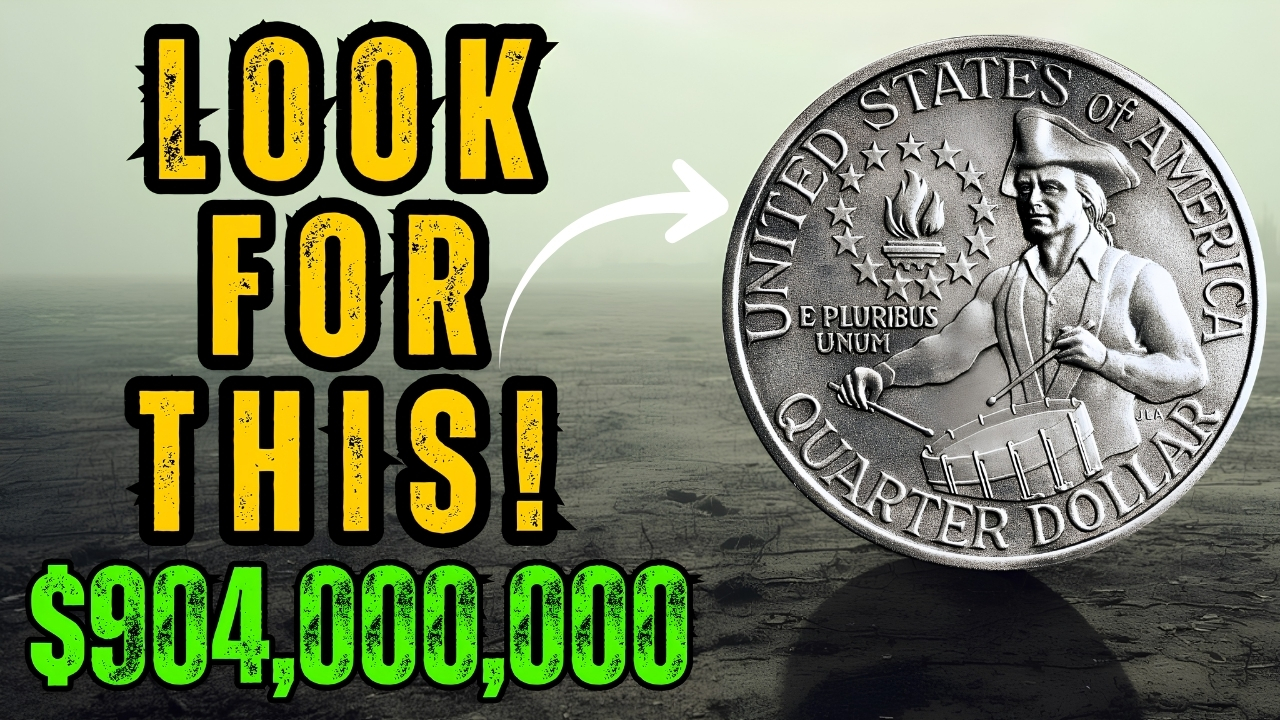
Rare Bicentennial Quarter : A Bicentennial quarter associated with a headline figure of $30,330 can sound like an ordinary piece of pocket change turned into a jackpot.
The reality is more nuanced: nearly all 1776–1976 quarters remain worth 25 cents, while a small number of authenticated, unusual examples—especially those with dramatic mint errors, scarce metal compositions, or exceptional grades—can command major collector premiums.
Why These Quarters Matter
The United States issued Bicentennial quarters in 1975 and 1976 to commemorate the nation’s 200th anniversary. Instead of showing a single year, the obverse carries the dual date “1776–1976.” The reverse features a colonial drummer, designed by Jack L. Ahr, along with a torch surrounded by 13 stars.
Because they were made in huge quantities and circulated widely, Bicentennial quarters are familiar to Americans. That familiarity is exactly why sensational valuation stories spread so quickly.
People often find one in a change jar, see the unusual date and drummer design, and wonder whether they have found something rare.
Most have not. Common Philadelphia coins without a mint mark and Denver coins marked “D” were struck in copper-nickel clad metal and produced in very large numbers. In circulated condition, they ordinarily remain face-value coins.
Even many attractive uncirculated examples trade for relatively modest collector amounts rather than life-changing money. The important point is that the “1776–1976” date alone does not make a quarter rare.
Where a $30,330 Value Could Come From
A high-value figure such as $30,330 should not be treated as a standard price for every Bicentennial quarter. It would have to refer to a particular coin with extraordinary attributes, ideally confirmed by a reputable third-party grading and authentication service and supported by a documented auction result.
The kinds of features that can create that level of interest include:
- A major mint error, such as a coin struck on the wrong metal blank, known as a wrong-planchet or off-metal error.
- A visually dramatic double strike, broadstrike, or off-center strike.
- A serious doubled-die variety confirmed by specialists.
- A rare silver issue in an unusually high state of preservation.
- A coin that has received an elite numerical grade from a recognized grading company.
- A documented provenance or auction history that proves collector demand.
Wrong-planchet errors are among the most dramatic possibilities. For example, a quarter may accidentally be struck on a blank intended for a dime, nickel, or another denomination.
Such a mistake can leave the coin undersized, unusually light or heavy, oddly shaped, or incomplete around the edge. Publicized auction records show that verified off-metal Bicentennial quarter errors can bring thousands of dollars, depending on the exact error, grade, and market demand. One cited example involved a 1976-S proof quarter struck on a dime planchet that sold for $12,000.
That does not mean every thin or damaged quarter is an error. Damage after the coin left the Mint—such as filing, corrosion, bending, or heat exposure—usually reduces its value. The distinction between a genuine Mint error and ordinary damage must be made carefully.
Silver, Mint Marks, and Condition
Bicentennial quarters came in more than one format. The standard circulation coins were copper-nickel clad, but the U.S. Mint also issued collector versions containing 40 percent silver. These silver pieces generally bear an “S” mint mark because they were made in San Francisco.
However, an “S” does not automatically mean the quarter is silver, rare, or valuable. San Francisco also produced clad proof coins. Weight, edge appearance, packaging history, and professional examination may help establish whether a piece is a silver issue. A normal clad quarter usually shows a visible copper-colored layer on the edge, while a silver-clad collector piece has a more uniformly silver-colored edge.
Condition also matters enormously. Collectors use a grading scale ranging from worn, circulated examples through Mint State and Proof examples.
A coin that looks bright at first glance may still have hairline scratches, weak luster, contact marks, cleaning damage, or other flaws that prevent it from earning a premium grade.
The difference between an ordinary uncirculated quarter and one at the top of the grading scale can be substantial.
Auction summaries indicate that exceptional 1976-S silver quarters in very high grades have reached five-figure results, including a reported MS69 sale of $19,200. This kind of result reflects rarity in top condition, not the value of average Bicentennial coins.
How to Examine One Safely
If you find a Bicentennial quarter that looks promising, do not clean it. Cleaning can create surface damage that collectors and grading services can detect, often reducing the coin’s marketability even when the coin is otherwise rare.
Start with a simple inspection under good light:
- Check for the “S” or “D” mint mark, or note its absence.
- Look at the edge for the typical copper layer found on clad quarters.
- Compare its diameter and thickness with a standard modern quarter.
- Weigh it on an accurate digital scale if possible.
- Look for obvious doubling in lettering, numerals, or design details.
- Watch for a major off-center strike, unusual metal color, missing design elements, or abnormal shape.
- Avoid assuming that small cracks, stains, or scratches are valuable errors.
A genuine doubled die is different from machine doubling, which is common and often has little collector value. Likewise, a die crack or filled mint mark may be interesting, but most minor die imperfections do not justify dramatic claims. Value rises when the feature is scarce, obvious, confirmed, and preserved in strong condition.
Rare Bicentennial Quarter
Before accepting a $30,330 claim, ask for evidence. A credible valuation should identify the exact coin, its mint mark, composition, variety or error type, certification number, grade, auction house, sale date, and actual realized price. An asking price in an online listing is not proof that a coin sold for that amount.
For a potentially valuable piece, consider showing it to a respected coin dealer or submitting it to a major third-party grading service.
Also Read this – $2000 Social Security Payments of October is arriving soon, check your Eligibility Now
Professional authentication is particularly important for suspected silver varieties, off-metal strikes, doubled dies, and high-end errors. It protects buyers and sellers from costly mistakes.
The appeal of Bicentennial quarters is real: they are tangible reminders of America’s 1976 celebration, and rare examples can be important modern U.S. collectibles.
Still, collectors should approach extraordinary values with patience. The drummer boy design is common; the rare error, exceptional grade, and verified auction record are what create the exceptional price.